D&D Ambience: How to Build a Tavern, a Forest and a Dungeon That Last the Whole Session
The best D&D ambience is the one nobody mentions at the end of the night. How to compose a tavern, a night forest and a dungeon that stay under the voices for four hours, how to switch scenes without breaking…
The best D&D ambience is the one nobody talks about after the session. It ran for four hours without anyone really hearing it, it made the tavern loud and the dungeon quiet, and it never covered a player’s voice. This guide is about building that: three scenes that hold a whole evening, tavern, forest and dungeon, and the few rules that keep them under the table instead of on it.
One speaker in the middle of the table changes everything. My pick: JBL Flip 6 · the full selection below
Rule one: the place, not the effects
Sound at the table should say where you are, not what happens. A tavern is a fire, a room late in the evening, a harbor outside. A dungeon is dripping water and a deep rumble. What happens, the fight, the trap, the dragon, is narrated. Effects libraries feel exciting for ten minutes and then compete with the DM.
Rule two: always under the voice
Set the level while someone is talking normally, until the ambience just vanishes behind them. That is the level. It will feel too quiet when the table goes silent; that is exactly the point. Silence with a faint fire underneath is tension.
The tavern: noise that reassures
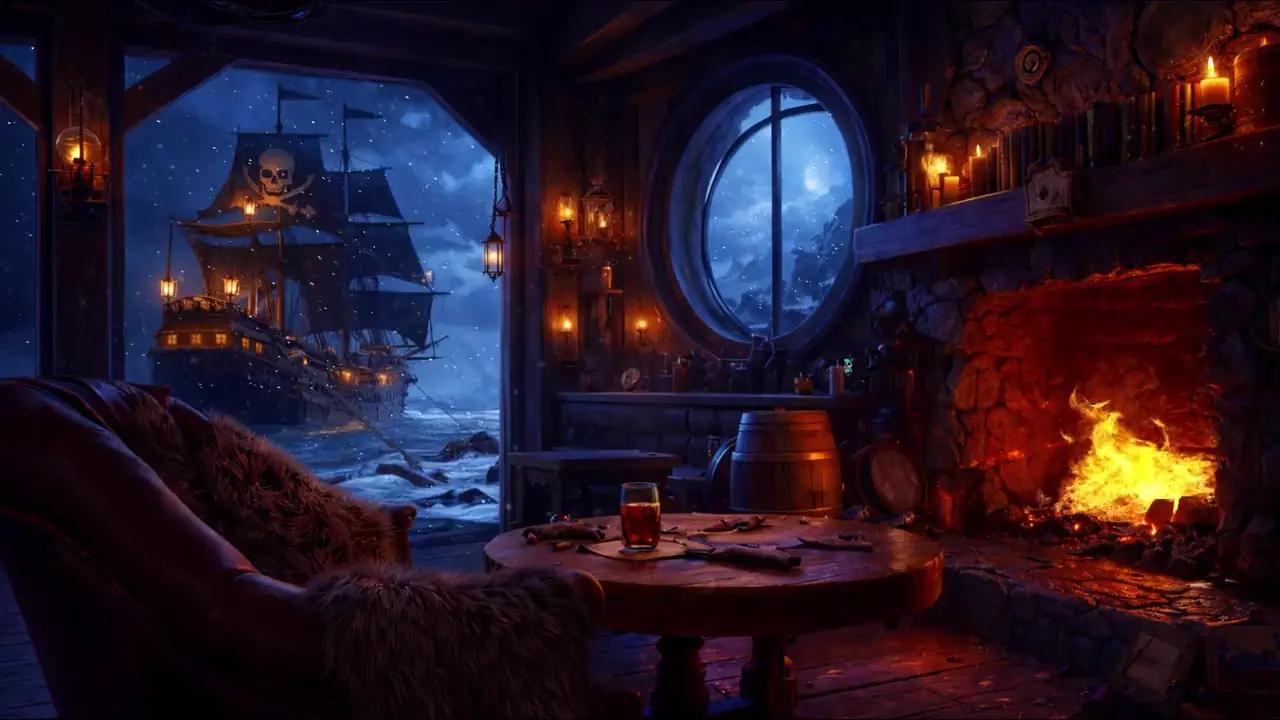
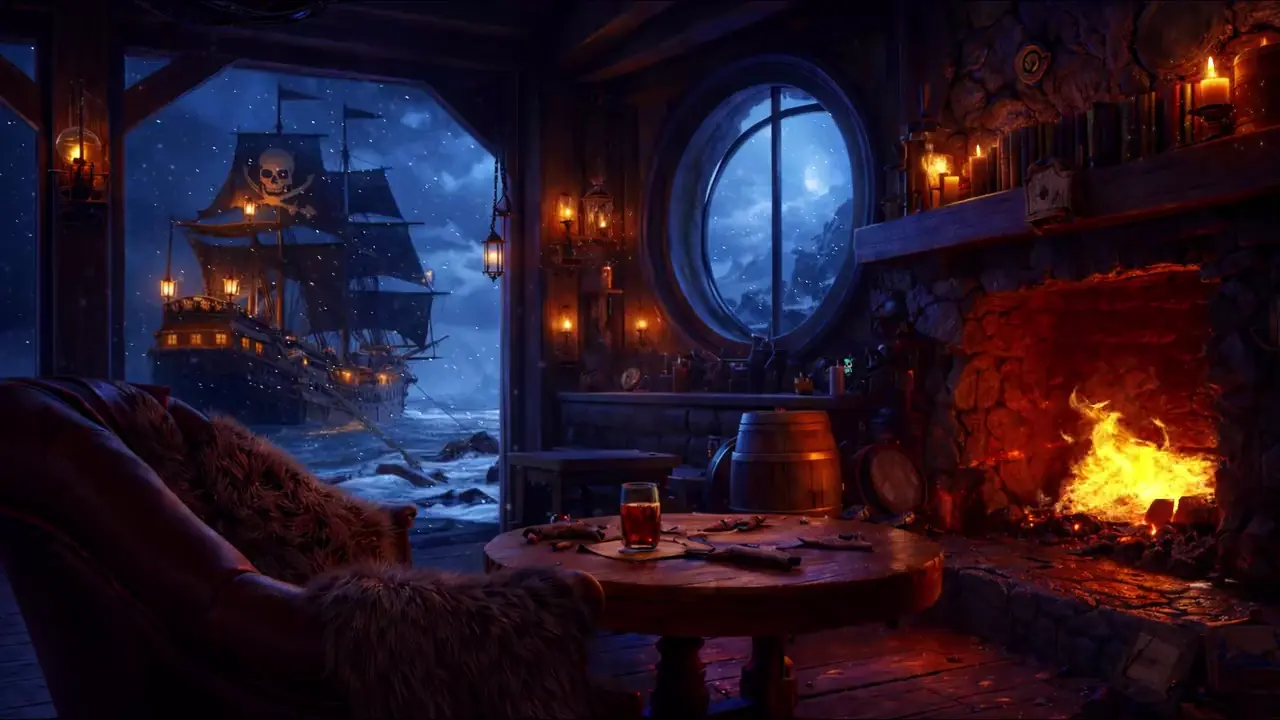
The tavern is the most played scene and the most often ruined, usually by a dense crowd loop that exhausts everyone in ten minutes. What you need: a clear hearth (it sets the warmth), a room late in the evening rather than a full one, and something outside, a harbor, rain, wind. The Studio’s Pirate Tavern is composed exactly that way: the hearth close to you, the quiet room around, the galleon at the quay outside. Slide “your place” toward the window when the party arrives, toward the fire when they settle in.
The night forest: leave room
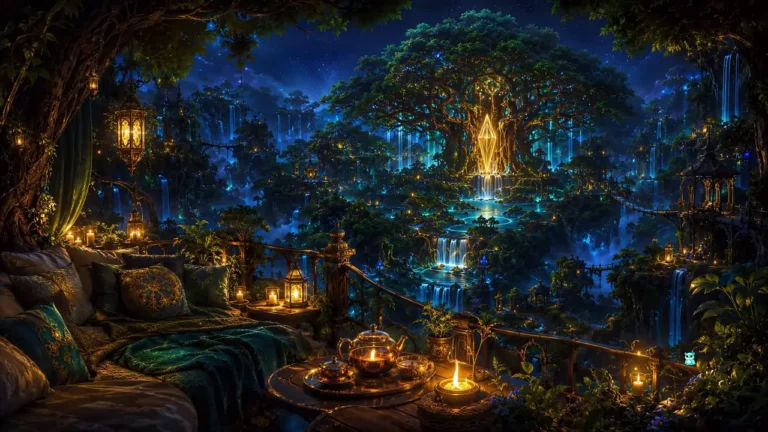
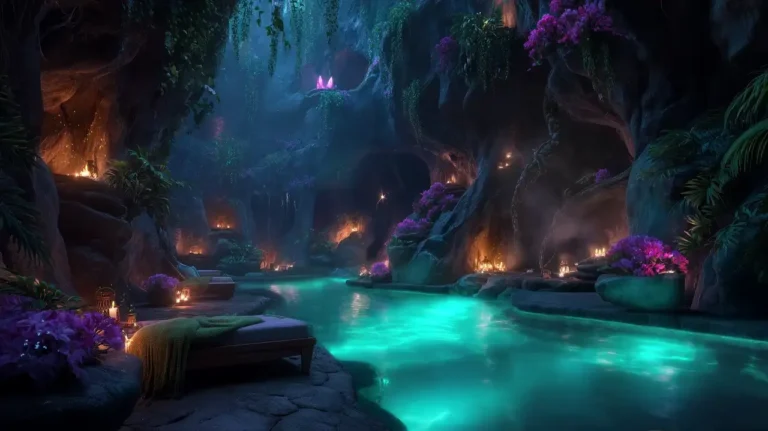
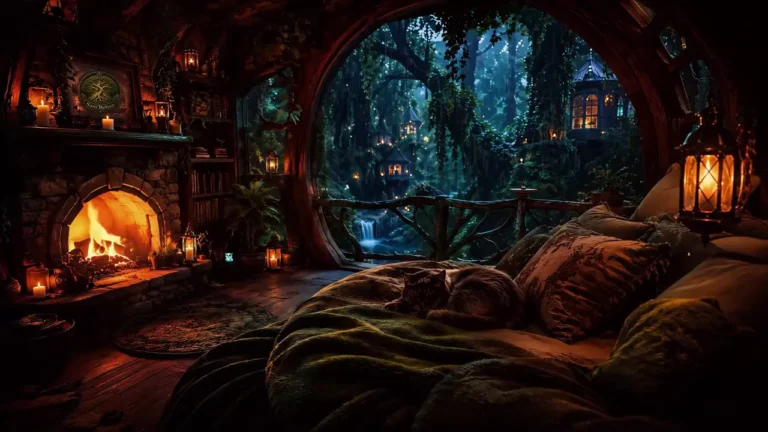
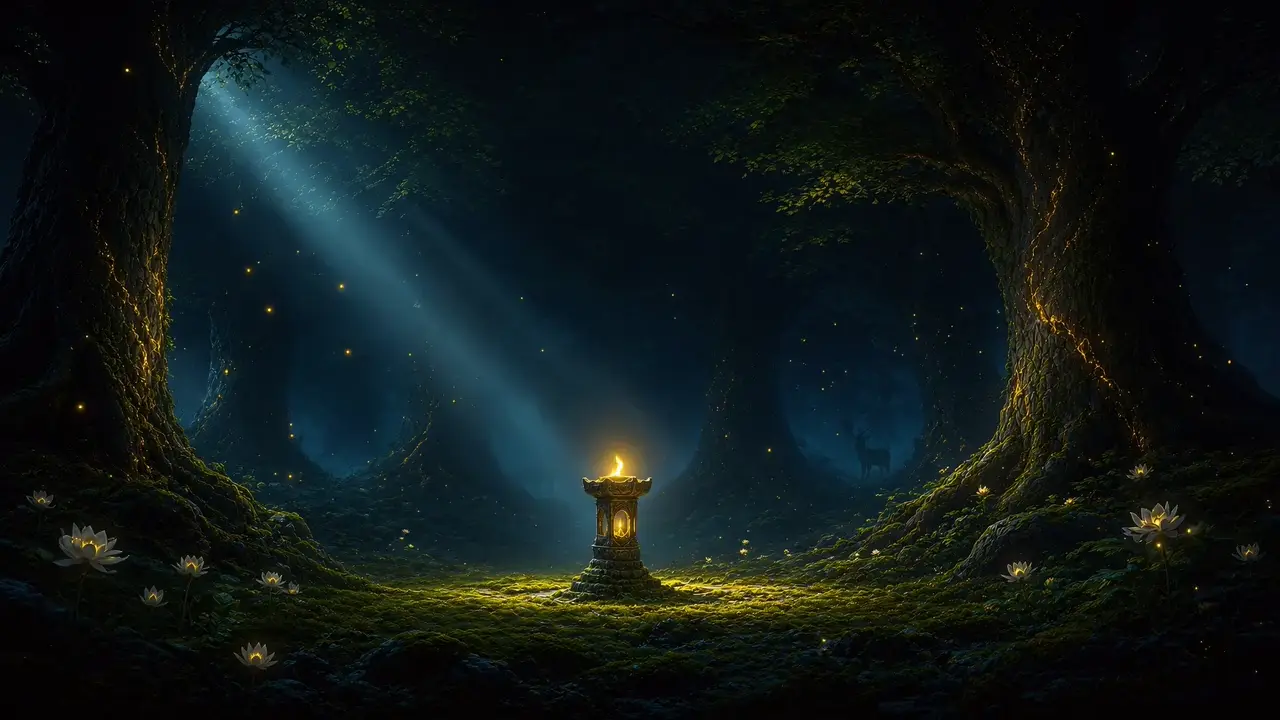
The forest is a slow-tension scene. It needs very little: the night floor (crickets, leaves), water far away for depth, a rare owl. Nothing else. Players fill the silence with their own fear. Two shelters suit it: The Lantern Clearing for a camp, The Amethyst River for a stranger wood.
The dungeon: the drop and the rumble
A dungeon is two sounds: water dripping from a vault and a deep rumble that never quite resolves. Add a distant waterfall for a cavern, and cut the music entirely. The Pirates’ Cave and The Cave Pool are built on that: the cave around you, the drops above, the rumble beneath.
Changing scenes without breaking the table
Never cut. Fade the old place down over the last sentence of the narration, then bring the new one up while the players react. In the Studio, choosing another shelter does exactly that, with a crossfade; the sleep timer becomes a session timer, and “Towards calm” lets a scene settle by itself during a long dialogue.
Music? Rarely, and low
Music at a table works only in three moments: the opening of the session, a reveal, the last scene. The rest of the time it fights the voices. When you use it, choose pieces without a melody players can hum, and keep them around 12 percent. Every Studio shelter has a few, composed for that.
The gear that makes the table
It takes very little, but not anything: a speaker with bass placed in the middle of the table rather than a laptop that hisses from the corner, and a light that changes with the scene.
Three scenes, one evening
- Opening: Pirate Tavern, your place at the back of the room, music at 12 percent.
- Road and camp: Lantern Clearing, no music, the wind a little higher before the encounter.
- Exploration: Pirates’ Cave, music off, your place at the entrance, then by the fire for the rest.
If your table plays every week, the Circle opens all 37 shelters, four added sounds per place and eight-hour timers, for the price of one drink a month.
Frequently asked questions
What is the best D&D ambience for a tavern?
A clear hearth, a room late in the evening rather than a crowd, and a harbor or rain outside. Keep it under the voices.
Should I play music during D&D?
Rarely: the opening, a reveal, the last scene. Otherwise ambience without melody works better under conversation.
How loud should D&D ambience be?
Set it while someone speaks normally, until it disappears behind them. That is the level, even if it feels quiet in silence.
Can I run D&D ambience from my phone?
Yes, through a speaker in the middle of the table. The Studio runs in a browser, without an account, with a timer and crossfades between scenes.
Amazon links on this page are affiliate links: if you buy through them, Sam’Relaxe earns a small commission at no extra cost to you. Products are chosen because they fit the rituals described here, never for the commission. As an Amazon Associate I earn from qualifying purchases.